Showing posts with label auto repair. Show all posts

Wednesday, 21 January 2015

Importance of Computer Diagnosis for Your Car


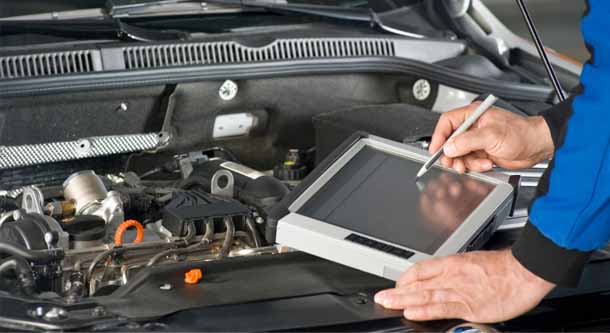
Being a car owner, one of the most annoying things that tend to happen over time is that of having a dashboard light illuminate with no real indication as to what may be causing the problem. Specifically, it is common to have a “check engine light” come on, which is very imprecise since there are so many different things that can go off beam with a car engine. This can lead to a lot of concern and hindrance for vehicle owners. That is why it is a good idea to have computer diagnostics run on the car by a specialized repair shop.

 
There are numerous benefits to a computer diagnostics test being run on one’s car. First of all, this is the finest technique to figure out what a particular problem is that a trouble light may have indefinitely indicated. Before that no real repairs can be done until the specific problem is figured out. Different components of the car are tested with a machine to get exact cause of the problem so that the experts can figure out what the best repair would be. And that is why diagnostic testing is meant for.

Generally, dealing with car problems can be a real pain. Just because many auto shops lack in skilled mechanics computer diagnostic plays an important role in figuring out problem that may be noticed by the car driver himself. This lets him to get the peace of mind desired and to have the needed repair done ASAP.

So if next time you notice something wrong while driving or the dashboard indicator tries to grab your attention it’s better to reach a specialized auto shop near you. 

Happy Driving

San Jose Transmissions and Auto Repair
1701 Alum Rock Ave, San Jose CA 95116
 (408) 258-6625

Saturday, 23 August 2014

5 Essential Maintenance Services to Avoid Major Auto Repair


At San Jose Auto Repair, we confidently believe in the power of preventative maintenance.
You can avoid time-consuming and costly repairs with a few simple service checks. To protect our loyal customers and help each visitor get the most out of their vehicle, we’ve put together a list of the 5 most important maintenance services. Regularly Scheduled Maintenance Service will keep your car running stronger and help you avoid major auto repair.

5 Essential Maintenance Services to Avoid Major Auto Repair:

1. Assess the quality of all fluids

Engine fluids lubricate moving parts to minimize the effects of friction. That’s why it’s imperative to keep this element clean of contamination and at the level necessary to do its job. Your owner’s manual will provide the manufacturer’s recommended oil change frequency, but we suggest an oil change once every 3,000 – 6,000 miles (depending on the type of oil used).
As you request an oil change, have the auto mechanic check the following fluid levels:
  • Motor oil
  • Transmission fluid
  • Brake fluid
  • Power steering fluid
  • Coolant (or anti-freeze)
  • Windshield washer fluid
Keeping up with fluid quality and quantity can raise the car’s fuel economy, increase the engine’s reliability and prevent costly damages.

2. Take care of your tires

For proper tire care, you need to regularly schedule tire rotations and alignment checks, and maintain proper tire air pressure.
Regular tire rotations will ensure all tires wear down evenly. While most manufacturers recommend a rotation every 7,000 miles, the needed frequency really depends on tire quality, vehicle weight and driving conditions. A simple rule of thumb is to request a tire rotation with every other oil change. Maintaining a regular tire rotation schedule can extend tire life and better protect you and your family.
Your wheel alignment can have a significant impact on the performance of your suspension system. When your alignment is off, the car will fight you for control on every drive. Have your alignment evaluated annually, or any time you purchase new tires or experience a collision.
Finally, your tires’ air pressure is crucial to fuel economy, as well as your safety. Under-inflated tires decrease fuel economy, compromise handling, wear down tread and can cause blowouts at high speeds. It’s estimated that annually, 600 fatalities and 33,000 injuries are due to under-inflated tires.
On the other hand, over-inflated tires also ride roughly, cause uneven tread wear and can lead to a blowout. Follow the inflation pressure recommendations in the owner’s manual, on the tire information label in the glove box or the driver’s side door.

3. Check belts and hoses

They might not seem like much, but your belts take the brunt of all vehicle functions. Belts kick-start the alternator and help operate the water pump. Newer vehicles use serpentine belts, which drive most engine parts. Have your auto repair technician check for cracks, fraying and exposed threads.
If you drive an older vehicle using V-belts, have your specialist look for glazing, cracking or excessive wear, especially on the belt’s underside. Keeping your belts strong and healthy will help your engine operate more efficiently, as well as prevent expensive damage.

4. Change your filters

Your vehicle has two essential filters: the cabin filter and the engine filter. These two air filters work hard keeping the air running through your engine and through the passenger cab clean and contaminant-free.
Check your owner’s manual to see how often your filters need to be replaced to prevent dirt and debris from clogging important engine functions. It’s also a good idea to request a filter check with every oil change.

5. Keep up with your battery life

As the battery ages, it no can no longer hold a charge and eventually dies. Begin performing battery charge tests (or ask your friendly auto repair shop to do it for you) when the battery hits the 3-year mark. It’s also important to make sure the battery stays clean and corrosion-free.
If you do notice buildup on the contacts, no big deal! A simple scrub with a battery cleaning brush should take care of that.

While auto repair is frustrating and expensive, proper maintenance can prevent most serious damage.

Keep up with these 5 essential maintenance services with San Jose Auto Repair. Our ASE-Certified Technicians will help your vehicle run efficiently for years to come.
Monday, 14 October 2013

Need To Learn About Auto Repair? These Tips Are For You!

Have you thought about what you can do to deal with things when they start to happen to your vehicle? Have you considered fixing the problems yourself? Perhaps you want better insight about what goes into choosing the right person to do the job for you. Keep reading to learn more about these choices.
Don’t underestimate how important it is to have some kind of emergency kit within your vehicle. Include a spare tire, a jack, a battery charger and a container full of gas. Should your car break down in the dark, it is helpful to have extra batteries, a flashlight, and some blankets.
Ask auto mechanics if they have worked on your particular make and model of car before contracting with them. If the mechanic says they have, then they are likely aware of just what repairs need to performed in order to have your car operating well again.
Read online reviews of local body shops. This will give you an idea of how the public likes their customer service, and how well they are at fixing problems. You can find a place you feel comfortable enough with to fix your car.
Replacing your own taillights and headlights is an easy way to save money. It’s easy in some vehicles, and it’s a lot cheaper than having someone else do it. Find out if anyone in your family can do it and could pass along their knowledge to you.
Take off your key chains from your car keys to reduce the weight on your ignition. Too many items on your key chain can weigh down your car’s ignition. If your key sticks, install new tumblers and use a lighter key chain.
Always remember when you need to have the oil changed in your car. Your vehicle may mot run smoothly or efficiently if you do not take this important step. It can vary a bit between different vehicles and cars go much longer between oil changes than they used to. But you must do them when recommended.
It is often best to get minor issues checked by a qualified professional if you are not sure how to fix them. Sometimes when there are small issues with your vehicle, ignoring them will only lead to the problem becoming much larger as time goes on.

Monday, 7 October 2013

Early signs that your car or truck has transmission problems

It’s tough to really point to any part of your car or truck and say “This is the most important thing to keeping your car running.” Think about it. Without oil, your engine seizes. Without coolant, it overheats. Without a battery, it will not start. And without air in your tires, you’re not going anywhere. You get the picture. A car is truly the sum of its parts – and when any of those vital components aren’t maintained and fail, you’re stuck and it’s time to call roadside assistance.

Many technicians will point to your transmission as the most important thing to care for. While it’s not the only thing to stay on top of, it certainly ranks way up there. You will not find a garage that specializes in coolant flushes, battery replacement, etc, but there are garages that specialize in transmissions. That has to tell you something. Your car’s transmission is essentially the component that transmits power from the engine to the wheels and makes it “go!” That’s why it’s so important to be able to identify transmission problems.

Early Warning Signs of Transmission Trouble

  1. Slippery gears. Even if you’ve never experienced a slipped gear, it’s pretty easy to identify as it’s happening. Imagine driving along and suddenly putting your car in neutral and pushing the gas. The engine revs and nothing happens. With a slipped gear, you may experience this, followed by a sudden lurch as the gear catches and your car begins to roll again. Usually this means your transmission fluid is low, which could be caused by a leak or neglecting to keep the fluid reservoir filled.
  2. Shifting issues. If you drive a manual transmission and have problems shifting gears, this is a dead giveaway you’re having issues with your transmission. If you drive an automatic and notice your car shifting either too early or too late, this is also a sign your transmission could be full of dirt and other gunk and needs to be flushed.
  3. Momentary stalling or surging. Neither of these things are normal. If your car starts lurching forward or suddenly slowing for no reason while driving, it’s time to have a mechanic take a look at your transmission.

Check Your Transmission Level

  • Sometimes it’s easy to determine if you need a transmission flush or a topping off of transmission fluid just by popping your hood and checking the level that’s in your reservoir. Your transmission will have a dipstick similar to your oil dipstick that you can check in the same way. Just remember the following.
  • Make sure your engine’s warm and your car is on. Also, make sure your emergency brake is engaged.
  • Transmission fluid should be clear or pinkish. 
  • If not, it’s time for a flush.If the level doesn’t reach the dipstick’s FULL line, add more.


Sunday, 6 October 2013

4 Important Winter Automotive Maintenance Tips

As winter quickly approaches, it’s important to perform simple preventative maintenance steps to stay safe in the blustery conditions. Investing in these simple repairs could be the difference in arriving to your destination on time or waiting for a tow truck on the side of the road.
Here are the basic winter maintenance repairs that the certified mechanics at San Jose Auto Repair recommend you do before the snow flies each year:
1. Wiper Blades
Changing your wiper blades is one of the most important repairs you can make to your vehicle. There’s nothing more frightening to be blinded by the mud, snow and salt splashed on your windshield while frantically trying to wipe it off with old, ineffective wiper blades. The auto repair pros at San Jose Auto Repair will help you select and install the best wiper blades for your vehicle.
2. Brakes
During the winter, the ice and snow can have a dramatic effect on your vehicle’s stopping distance. Why make it even worse with bad brakes? Having your brakes inspected by a certified professional will give you the piece of mind to know that your braking system is safe for winter driving. If your brake pads or rotors need to be replaced, we will give you an honest estimate and have you back on the road in no time.
3. Battery
There’s nothing fun about getting into your car and hearing the slow “Ka-Chugging” of the starter due to dead battery. Don’t get caught in the cold this winter, check your battery for signs that it needs replacing. Take a look at the posts on the battery. If there is a build-up, chances are that your car battery needs to be replaced. All vehicle batteries should be replaced every five to seven years. Not sure or need a second opinion?  Our certified technicians will give you an honest answer and a fair price for all your automotive battery needs.
4. Alignment
Navigating the icy roadways can be a difficult task for any winter driver. Having the proper alignment in your vehicle can help you avoid potential accidents. Check your vehicle for signs that you need an alignment. Uneven wear on the tread of your tires, shaking when driving or pulling to one side are all indicators of alignment problems. If you are experiencing one or more of these issues, bring your vehicle into your San Jose Auto Repair right away.

Tuesday, 1 October 2013

Top 3 Causes for Engine Repair

Engine repair can be both costly and time-intensive. Most engine problems, however, can be easily avoided with proper routine maintenance and service checks. Make sure you discuss what service your car needs and when it needs maintenance with your  auto mechanic at San Jose Auto Repair.

Avoid serious engine repair by understanding the most common causes for engine repair. Take steps to keep your engine clean, healthy, and working well for you and your car.

1. Neglecting to change oil and filters

When you fail to change your oil every 3,000 to 5,000 miles (exact mileage is dependent upon your car make and model), your engine will feel the effects. Fresh oil, proper oil levels, and new filters should be installed and monitored on a regular basis. Ask your local mechanic or check your owner’s manual for the mileage requirements specific to your car.

2. Overheating

If you notice smoke seeping out from underneath your hood, your vehicle is overheating. Avoid further danger to your engine; turn your car off and call your local mechanic right away. An engine can overheat as a result of improper coolant levels, a cracked head or blown gasket, a faulty thermostat, or dirty coolant fluid.

3. Catalytic converter failure

A vehicle’s catalytic converter can fail due to a leak caused by rust or corrosion, or as a result of internal plugging caused by excessive carbon buildup. The catalytic converter is normally responsible for cleaning emissions from the tailpipe.